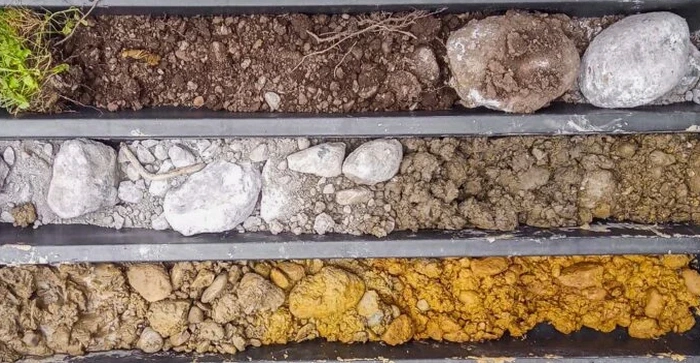
The most expensive mistake a builder makes in Celbridge isn't a design flaw—it's starting earthworks without seeing what's underground. The Liffey tributaries that cut through the town left behind alluvial pockets and varying depths of glacial till. Guessing the bearing stratum leads to over-excavation or, worse, settlement cracks six months after handover. We run exploratory test pits across Celbridge's residential and commercial sites to expose the soil profile directly. The walls of the pit tell you more in ten minutes than a desktop study ever will. From the Rye River valley to the higher ground near Castletown, our crew mobilizes a tracked excavator and a geotechnical engineer to log, photograph, and sample each horizon. Before you pour a strip footing or specify a ground improvement method, you need to know what you're really building on. Many of our Celbridge clients combine the test pit data with targeted triaxial testing when the recovered samples show soft silty clays that need strength parameters for foundation design.
A one-hour test pit in Celbridge reveals more about your foundation conditions than a week of desk research.