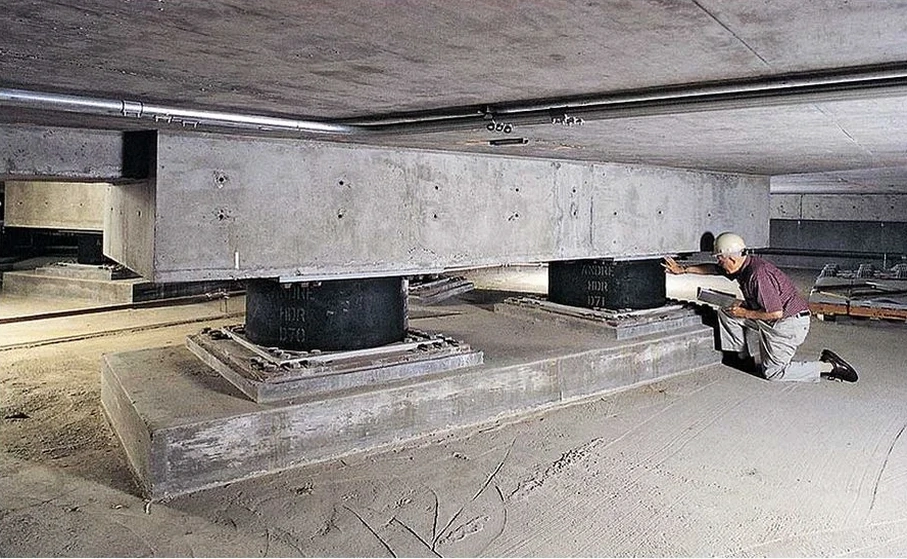
A three-storey apartment block near the Liffey was the first time we saw a developer in Celbridge truly grasp the cost of compliance. The soil report came back with soft alluvial clays over limestone bedrock. Standard foundations would have transmitted every tremor straight up through the frame. The solution required decoupling the structure from the ground. Base isolation seismic design does exactly that. It inserts flexible bearings between the foundation and the superstructure. Ground moves sideways. The building stays put. In Celbridge, where the proximity to the River Liffey creates pockets of compressible ground, seismic microzonation data becomes critical for tuning the isolator properties. Without it, you are guessing on the spectral displacement demand.
An isolated structure in Celbridge can see seismic forces reduced by 60-80% compared to a fixed-base equivalent. The isolator displacement, not the building drift, governs the design.