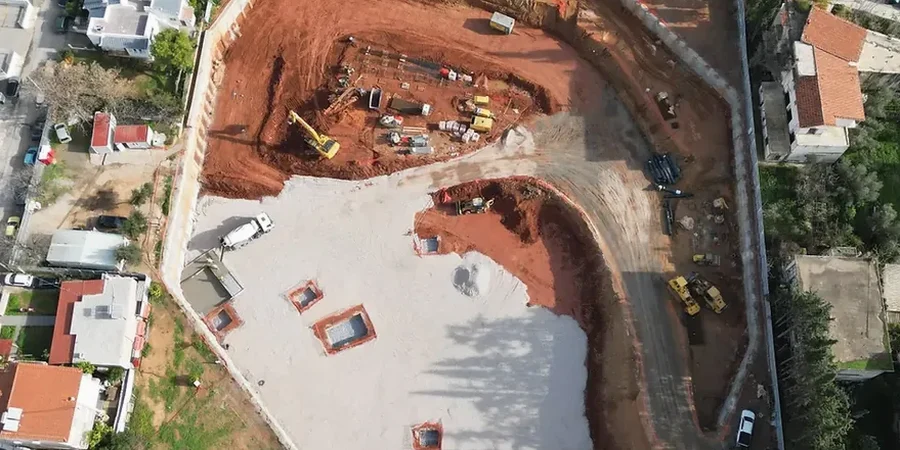
Celbridge sits at roughly 55 meters above sea level along the Liffey valley, and with a population now exceeding 21,000, the pressure to build downward is real. Developers squeezing two-level basements or underground parking into compact town plots face a ground profile that changes fast: glacial till over karstified limestone. Our team designs deep excavation support using observational method principles, so the shoring adapts to what the ground actually reveals, not just what the desk study assumed. For tight urban jobs near existing masonry structures, we often combine the excavation design with a settlement monitoring plan that tracks millimetre-level movement on adjacent buildings throughout the dig phase.
A deep excavation design that ignores perched groundwater in Dublin Boulder Clay will overpredict stand-up time and underpredict wall deflections by 30–40 percent.