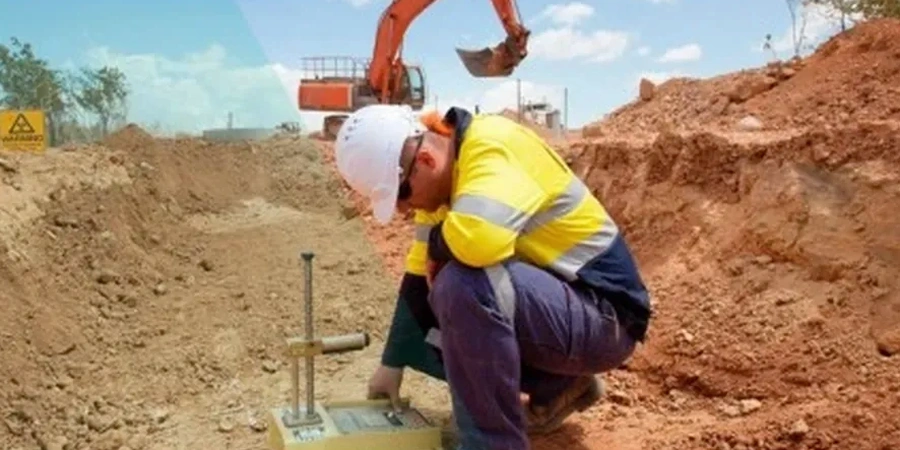
Seismic engineering in Celbridge addresses the critical need to assess and mitigate earthquake risks for buildings, infrastructure, and public safety. While Ireland is often perceived as a low-seismicity region, recent geological studies and updated hazard models have prompted a more cautious approach to construction and land-use planning. This category encompasses a full spectrum of services, from soil liquefaction analysis to advanced structural protection systems, ensuring that developments in Celbridge meet modern resilience standards. The importance of these services has grown as Kildare County Council and national authorities increasingly require seismic considerations for certain project types, particularly those involving critical infrastructure or high-occupancy structures.
The local geology of Celbridge plays a significant role in seismic risk assessment. The town sits on a foundation of Carboniferous limestone overlain by glacial tills, sands, and gravels deposited during the Pleistocene. These loose, water-saturated granular soils can be susceptible to ground motion amplification and, in extreme scenarios, loss of strength. The proximity to the River Liffey and its alluvial deposits further elevates the need for specialized investigation. Understanding how these local ground conditions respond to seismic waves is essential for accurate hazard characterization, which is where seismic microzonation becomes indispensable, mapping variations in ground response across the Celbridge area to guide safe development.
Ireland’s regulatory framework for seismic design is primarily guided by Eurocode 8 (EN 1998), which provides the basis for earthquake-resistant design across the European Union. Although the Irish National Annex to Eurocode 8 defines the country as having very low seismicity, it still mandates assessments for certain consequence classes, particularly for structures whose failure could lead to significant loss of life or economic disruption. The National Standards Authority of Ireland (NSAI) oversees the adoption of these codes, and local authority planning departments in Kildare may request seismic assessments as part of the planning process for major developments. Compliance with these standards often requires detailed geotechnical investigation and, for high-risk sites, the implementation of advanced protective measures such as base isolation seismic design.
Projects in Celbridge that typically require seismic engineering services include multi-storey residential buildings, commercial complexes, schools, healthcare facilities, and strategic utility installations. Infrastructure such as bridges over the Liffey, water treatment plants, and data centres also fall under this scope due to their operational criticality. Even for smaller structures, developers and insurers are increasingly requesting seismic risk assessments to secure financing and coverage. The process often begins with a desk study and site-specific ground investigation, followed by a seismic hazard analysis that considers both regional seismotectonic setting and local soil behaviour. This integrated approach ensures that any necessary design modifications or ground improvement techniques are identified early, reducing long-term liability and enhancing community safety.
Under Ireland's National Annex to Eurocode 8, mandatory seismic design is generally limited to structures in higher consequence classes, such as hospitals or major infrastructure. However, Kildare County Council may require a seismic assessment for any large-scale development if the site investigation reveals potentially unstable ground conditions, making early consultation with a geotechnical specialist advisable.
The presence of soft alluvial soils and loose saturated sands near the River Liffey can amplify ground motions and pose a liquefaction hazard. Glacial till deposits, while generally competent, may vary significantly in thickness and stiffness, potentially creating differential site response patterns that require detailed microzonation to characterize accurately.
While a standard site investigation focuses on soil bearing capacity and groundwater, seismic microzonation specifically maps how different ground conditions will respond to earthquake shaking. It uses shear wave velocity measurements and dynamic analysis to classify areas by amplification potential, landslide susceptibility, and liquefaction risk, providing a hazard map for planning purposes.
Yes, existing structures can be evaluated and retrofitted using techniques such as base isolation, supplemental damping, or structural strengthening. A detailed seismic assessment determines the vulnerability and the most cost-effective retrofit strategy, ensuring compliance with current standards while minimizing disruption to the building's function.
We serve projects across Celbridge and surrounding areas. More info.