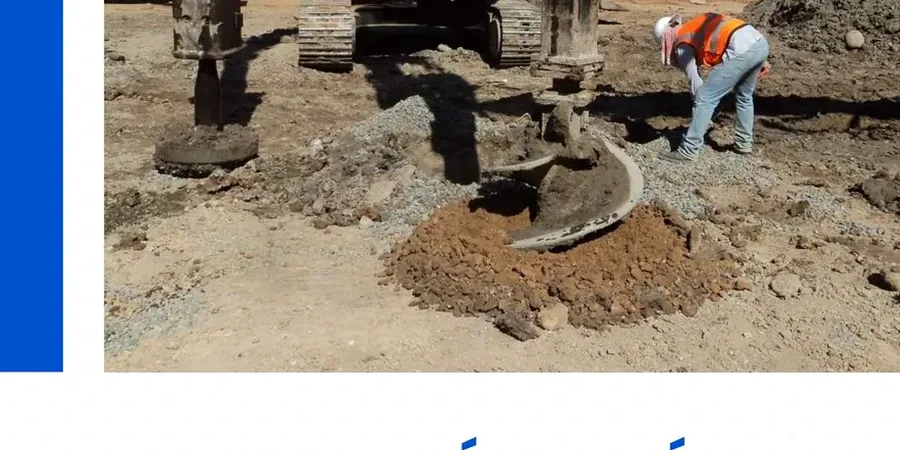
The geotechnical contrast between Celbridge’s eastern housing estates near the Liffey and the western lands rising toward the M4 is sharper than many developers realize. On the river side, boreholes often reveal layers of soft alluvium and loose sands extending to depths of 4 to 6 metres, while the higher ground west of the town center transitions into stiffer glacial till. This variability means that a standard shallow footing design that works near the Celbridge GAA club may be entirely unsuitable for a light industrial unit planned closer to the riverbank. A ground improvement strategy using stone columns becomes a highly effective solution, creating stiffened composite ground by introducing compacted gravel elements that densify the surrounding soil and provide controlled drainage. When the in-situ permeability of a site indicates poor consolidation rates, the drainage function of stone columns becomes as critical as their load-bearing role.
A well-designed stone column grid does more than carry load – it fundamentally changes how pore pressures dissipate during a seismic event.